

Writing History When History Is Fragmented
Crafting Musa: Lion of Mali in the Absence of Certainty


Hi,
I don’t publish a lot of comic content on The Author Stack, but more and more authors are talking about making comics from their work. Since I grew up in comics, had my first success in comics, and used comics to build my “empire”, I love when creators write guest posts for The Author Stack that can be actionable and relevant to novelists.
Recently, my friend TJ Sterling asked if I would be interested in having the co-creator of his series, MUSA: Lion of Mali, write about how they went about creating this wholly original piece that blends history and fantasy. The campaign is over, but late pledges are up for this Kickstarter book.
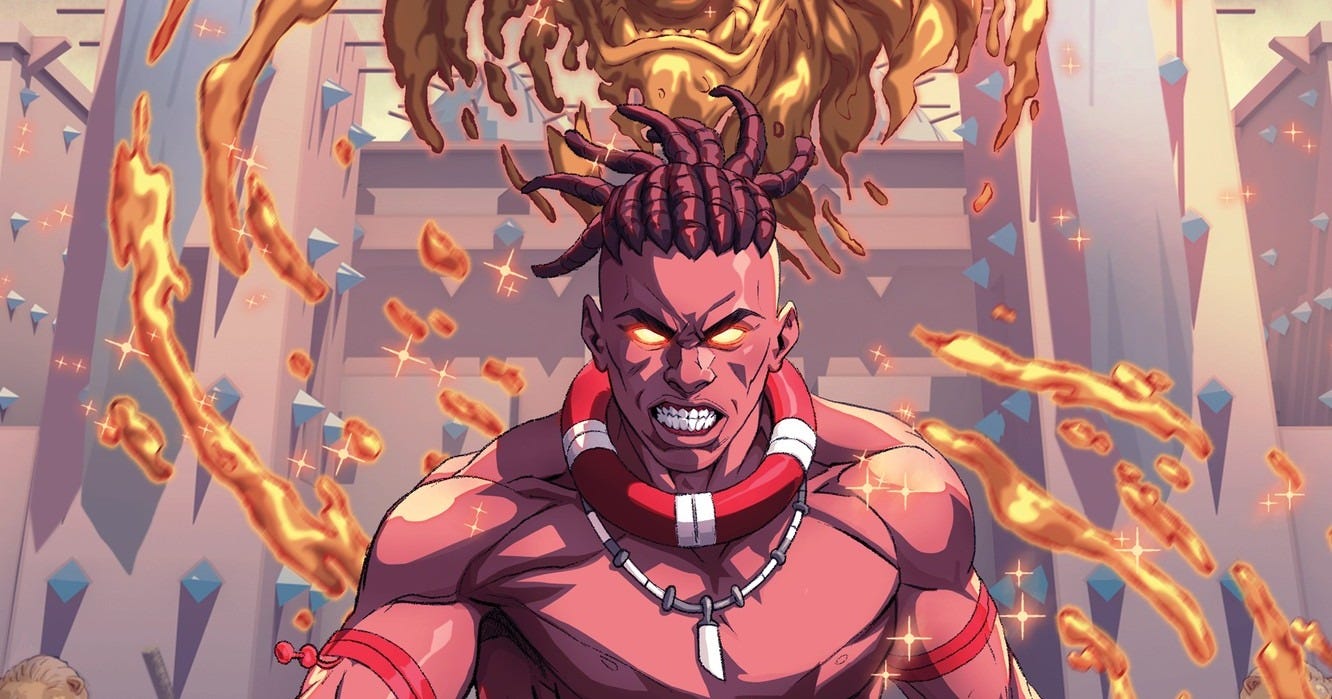
MUSA: Lion of Mali is a historical fantasy epic centuries in the making. Join us in this legendary tale of family, magic, and empire-building.
Mansa Musa, the wealthiest man in history, steps off the pages of legend in an epic tale of family, magic, and empire-building, as he embarks on a journey that will shape the destiny of an entire continent and quite possibly the world!
Writing historical fiction is always an act of translation.
You’re taking the past, filtered through incomplete records, political agendas, oral traditions, colonial distortion, and outright erasure, and translating it into a narrative language modern readers can understand. But what happens when the history you’re adapting isn’t just incomplete, but contradictory? When primary sources disagree, timelines blur, and the subject of your story exists more as legend than documented life? When you’ve got more fiction than fact to build off of?
That was the challenge I faced while writing the 100-page graphic novel Musa: Lion of Mali, a sword-and-sorcery tinted historical epic centered on the early life of Mansa Musa, ruler of the Mali Empire and widely regarded as the wealthiest individual in recorded history.
Most people know Mansa Musa as a finished figure: a middle-aged emperor whose (in)famous pilgrimage to Mecca in 1324 disrupted entire regional economies, who commissioned mosques and universities across West Africa, and whose reign helped solidify Mali as a center of learning, culture, and global trade for Africa and the rest of the world. But the man before the crown, the young Musa Keita, still forming his worldview, values, and ambitions exists largely in his own massive shadow.
This article is about how I approached transmuting that shadow into a living, breathing protagonist while navigating three core challenges:
Very little hard, verifiable historical information
Conflicting reports across African, Arab, and European sources
The responsibility to remain respectful to the cultures, past and present, native to the story’s region
Instead of treating these obstacles as barriers, I treated them as creative constraints. These were the “guardrails” that guided my choices instead of limiting them outright.
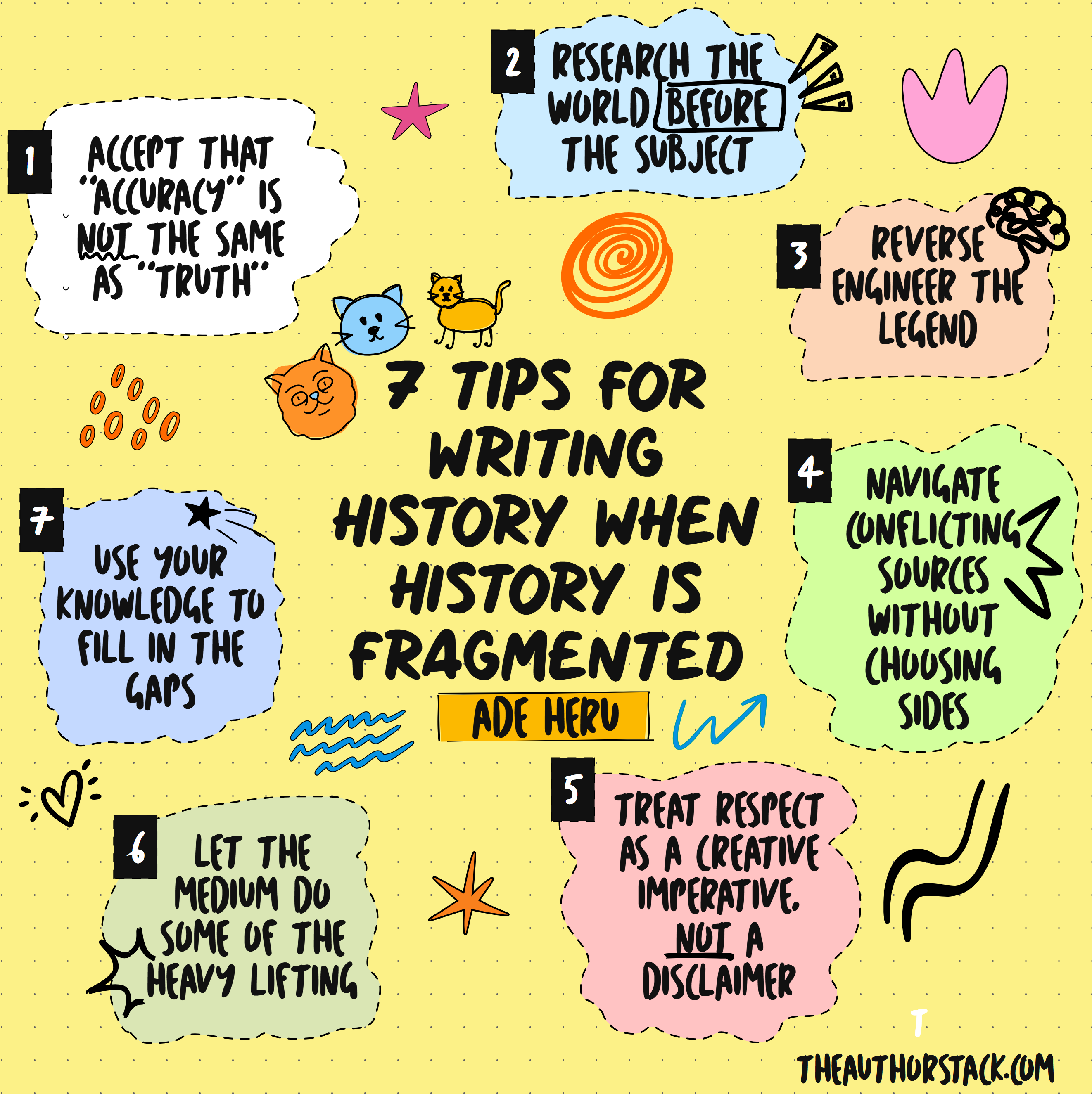
Accepting That “Accuracy” Is Not the Same as “Truth”
One of the first lessons any historical fiction writer has to internalize is that accuracy and truth are not synonymous.
Accuracy is all about facts: dates, names, places, recorded events, etc.. Truth is about context, motivation, and human experience. When historical records are scarce or contradictory—as they often are for pre-colonial African empires where a heady mix of oral tradition and colonial interference muddle the records—the pursuit of accuracy alone can become paralyzing. You find yourself frozen, afraid to invent, afraid to offend. Honestly, you just end up afraid to get it “wrong.”
I had to let go of the idea that there was a single, correct version of Mansa Musa’s early life waiting to be uncovered. I really didn’t have much of a choice.
Instead, I reframed the question:
What version of this story could plausibly exist within everything we know about the world that shaped him…with some magic thrown in?
That shift from reconstructing events to reconstructing conditions became the foundation of my process.
Researching the World Before the Man
When you can’t fully know the individual, you settle for getting to know the ecosystem.
Before writing a single line of dialogue, I immersed myself in the known cultural, social, religious, economic, and environmental realities of 13th–14th century West Africa, particularly the Mali Empire and its predecessor states. This included:
Islam as practiced in West Africa, which blended scholarship, mysticism, and local traditions rather than mirroring Middle Eastern orthodoxy
The numerous spiritual systems and customs that predated Islam’s rise in the region and somehow managed to coexist with the highly influential and codified religion
Trade networks connecting Mali to North Africa, the Mediterranean, and the broader Islamic world through gold, salt, and scholarship
Social hierarchies and governance, including the roles of griots, nobles, warriors, and scholars
Geography and climate, from the Sahel to the Niger River, shaping travel, warfare, and settlement
Oral storytelling traditions, where history, morality, and myth coexisted without rigid separation
This research didn’t give me a definitive portrait of young Musa, but it gave me something nearly as valuable: boundaries.
I now knew what couldn’t happen without breaking cultural logic. I knew which motivations would feel alien, which behaviors would ring false, and which themes would resonate authentically within the world he inhabited.
Within those boundaries, invention became permissible. And I still got to add my sword-and-sorcery.
Reverse Engineering a Legend
Most historical protagonists are written moving toward their legacy. In this case, I had to work backwards.
We know what Mansa Musa became: a ruler synonymous with wealth, learning, faith, and influence. The challenge wasn’t inventing greatness, but explaining how a man grows into it.
Rather than asking, “What did young Musa do?” I asked:
What kind of world produces a ruler who values scholarship?
What formative experiences would instill both humility and ambition?
How does a man learn to wield power responsibly before he has it?
What failures would temper the legend we know?
The Musa of Lion of Mali is in his early twenties. He is capable, intelligent, aware of his strengths, but mostly untested. He exists in a moment of transition, both personally and politically. The narrative doesn’t aim to canonize specific historical events where we can’t prove anything. Instead, it really just tries to dramatize pressures: expectations of lineage, the burden of the faith others have in you, the weight of empire, and the cost of leadership long before a crown is placed on your head.
This is what I mean by “reverse engineering.” The known endpoint informs the arc, but doesn’t dictate the steps.
Navigating Conflicting Sources Without Choosing Sides
Another major challenge was the presence of conflicting historical accounts, particularly from medieval Arab chroniclers whose writings are invaluable in setting the stage.
But the last thing I’d call them is “infallible.”
Instead of christening one source as “correct,” I treated contradictions as narrative texture.
History isn’t a courtroom transcript. It’s a conversation across centuries, shaped by perspective, politics, and proximity. When two sources disagree, that disagreement itself reveals something important about who was writing, why they were writing, and for whom they were writing.
In the graphic novel, this approach manifests in subtle ways:
Characters may have relationships or roles in the story that they didn’t in real life
Rumors and reputation carry as much weight as facts
Myth and reality blur, especially around figures of power
By acknowledging uncertainty within the story world, the narrative mirrors the historian’s dilemma instead of pretending it doesn’t exist.
Respect as a Creative Imperative, Not a Disclaimer
Writing about cultures that aren’t your own, especially cultures that have been historically misrepresented or erased, demands more than good intentions. It demands discipline.
Respect, for me, meant rejecting the urge to exoticize, simplify, or flatten West African history into a backdrop for spectacle. The country of Mali and its surrounding territories needed to feel as alive and integral to the story’s plot as Musa himself when everything was said and done.
Even though Musa: Lion of Mali embraces sword-and-sorcery aesthetics, those elements are rooted in the cosmology, symbolism, and oral traditions of the region. You won’t find anything imported wholesale from Camelot, Middle Earth, or Westeros.
It also meant recognizing that this story doesn’t belong solely to the past. The cultures of Mali, West Africa, and the African diaspora are living, evolving realities. Every creative choice carries contemporary resonance.
The question was never, “Can I do this?” It was always, “How do I do this responsibly?”
Letting the Medium Do Some of the Work
Graphic novels are uniquely suited to historical storytelling under uncertainty. Visual language allows implication, symbolism, and atmosphere to carry meaning where exposition might overreach or mix up the message.
In Musa: Lion of Mali, architecture, clothing, weapons, and landscapes communicate history without footnotes. Silence can speak. A single panel can suggest legend without asserting fact.
This was not a workaround. In my humble opinion, it was a strength that needed to be leveraged to make this project the success that it became.
The collaboration with my own Giant, Killer Press and my co-creator TJ Sterling’s RAE Comics ensured that research extended beyond the script into visual design, reinforcing authenticity at every level of the work. We spent months researching before assembling a team to create the amazing concept art of people, places, vehicles, and the like that the art team took and ran with.
Why This Kind of Historical Fiction Matters
When history is fragmented, silence is usually what ends up filling in the gaps. When we’re lucky. Sometimes, sadly, misinformation becomes the gooey filling at the center of the narrative.
Writing Musa: Lion of Mali was not about claiming authority over the past. It was about inviting engagement. It was always about giving modern readers a doorway into a history too often reduced to a paragraph, a statistic, or a trivia question about wealth.
Historical fiction, when done thoughtfully, doesn’t replace scholarship. It sparks curiosity. It encourages readers to ask better questions, seek deeper knowledge, and reconsider assumptions about whose histories are worth telling in epic form.
It transforms readers into researchers.
An Invitation to the Reader
Musa: Lion of Mali isn’t presented as the definitive account of Mansa Musa’s youth. It is one plausible story (with a pinch of magic thrown in for good measure!), crafted with care, respect, and a deep love for the cultures that inspired it.
If this article resonates—if you’re interested in how history, myth, and imagination can coexist on the page—I invite you to see the work for yourself.
Visit www.musalionofmali.com to explore how Giant, Killer Press and RAE Comics have brought this 120-page sword-and-sorcery historical epic graphic novel to life for modern readers. The Kickstarter campaign ended successfully on November 28th, 2025 but that was just the start of the conversation.
Remember, while history may be fragmented, the stories are still waiting to be told.
Author Bio:
Adeatoyshe “Ade” Heru is a historian, storyteller, and multimedia creator living in Baltimore, Maryland with his beautiful wife (and project manager) Felicia and their two beautiful children. He splits his time between his “day job” in Corporate America and his “Ade job” as owner, Chief Executive Officer, and Chief Creative Officer of his own publishing company Giant, Killer Press. “Musa: Lion of Mali” is just the first of many new titles he will be bringing to the independent comic and tabletop gaming markets. His big hope? To make those degrees in English, Multimedia Production, and Creative Writing pay for themselves.
What do you think? Are there any historical figures you would love to make come alive in comics? Let us know in the comments.
If you enjoyed this one, I highly recommend checking our archive, with over 600 exclusive member-only posts about how to help you build your own author career, including our course, fund your book on Kickstarter. You can take it for free with a seven-day trial, or give us a tip if you want to support us without committing long term.
 | A guest post by
|
Wow. This was very insightful and a detailed account of how to approach historical/cultural/colonial issues in historical fiction. I lived in Mali for 2 years and speak Bambara and was wondering about your sources and the recordings of griots telling stories. I still have a cassette tape of a griot telling the story of Karamogo Sissouko. Anyways, loved hearing about your process and the respect for context and all voices.
I very much appreciated hearing how you approached writing this historical story. I ordinarily wouldn't read a graphic novel, but now I totally want to experience how you used the constraints, the reverse-engineering, and respect to craft his (possible) Story.